

In recent years, discussions about digital transformation and urban development have become increasingly prominent in economic and technological debates worldwide. Within this context, the concept of smart cities has emerged as one of the most important modern models aiming to improve the quality of life in urban environments. Moreover, Governments and institutions seek to adopt this model with the aim of promoting sustainability, improving resource management efficiency, and providing more advanced services to citizens.
In fact, urban development is no longer limited to building roads or constructing modern buildings; it increasingly relies on digital technologies and big data. Consequently, the need has arisen for cities capable of interacting with their residents and infrastructure in a smart and interconnected manner.
In Saudi Arabia, this trend is particularly important given the major transformations driven by Vision 2030. Furthermore, the Kingdom is witnessing the launch of massive urban projects that rely on advanced technology and innovation. Therefore, understanding the concept of smart cities and their role in building a more sustainable and prosperous future has become essential.
In this comprehensive article, we will explore the concept of smart cities, the key technologies they rely on, and their economic and social benefits. We will also discuss the challenges of implementing this model and the role that consulting firms like Reins can play in supporting the transition to smarter cities.
Smart cities concept
When asked what smart cities are, the answer is simply that they are cities that use digital technology and data to improve the management of services and resources. In other words, these cities rely on interconnected systems that gather information from various sources and then analyze it to make more efficient decisions.
For example, Sensor systems deployed along roads can monitor traffic flow and send data to control centers. This information is then analyzed to adjust traffic signals or direct vehicles to less congested routes.
Furthermore, digitally advanced cities rely on the integration of several technologies, such as the Internet of Things, artificial intelligence, and cloud computing. This integration allows for the improved management of multiple sectors, including transportation, energy, healthcare, and education.
It is important to emphasize that the primary goal of this urban model is not simply the use of technology. On the contrary, the true objective is to improve the quality of life for residents, reduce resource consumption, and promote environmental and economic sustainability.
Why have smart cities become a necessity in the modern era?
With the increasing number of urban populations worldwide, governments face growing challenges in managing infrastructure and public services. Therefore, adopting smart technologies has become an effective solution to address these challenges.
Firstly, digital cities help improve resource efficiency. For example, smart energy management systems can monitor consumption and distribute electricity more efficiently. As a result, waste is reduced and significant financial savings are achieved.
Secondly, these cities contribute to improving the quality of life by providing fast and easy-to-use digital government services. In addition, citizens can access many services through electronic applications without needing to visit government offices.
Third, connected cities play a crucial role in reducing environmental pollution. Thanks to intelligent transportation systems and advanced energy management, carbon emissions can be reduced and air quality in cities improved.
Finally, these cities help boost economic growth. Advanced digital infrastructure attracts investment and technology companies, contributing to job creation and stimulating innovation.
The fundamental pillars of smart cities
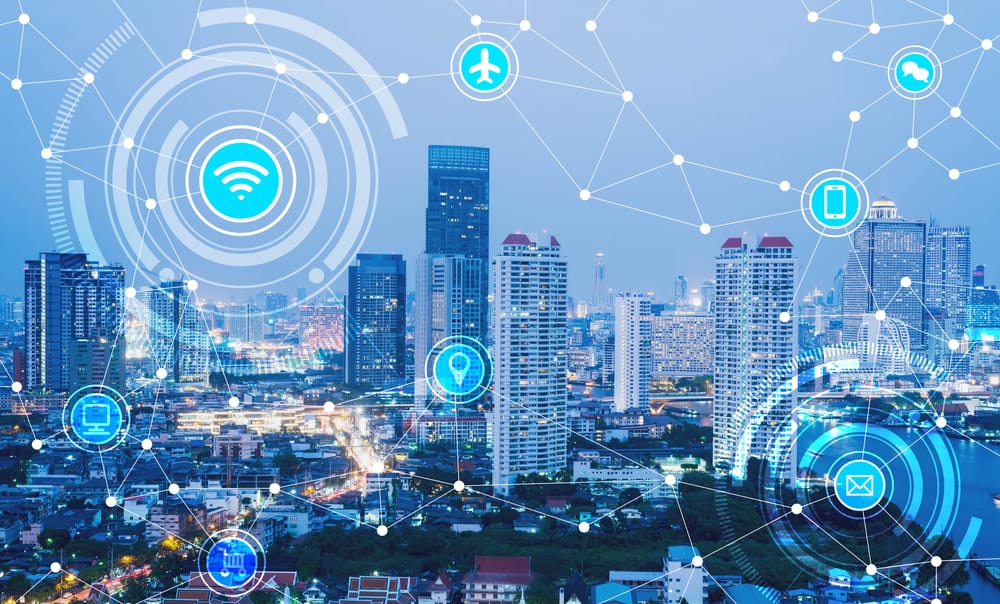
In order for any city to transform into a smart city, it must rely on a set of fundamental pillars that work in an integrated manner.
Digital Infrastructure
Digital infrastructure is the foundation upon which modern cities are built. Without strong and fast communication networks, smart systems cannot operate efficiently.
Therefore, smart cities rely on advanced communication networks such as 5G. In addition, these networks provide the ability to connect millions of devices and sensors simultaneously.
Internet of Things
The Internet of Things (IoT) is one of the most important technologies supporting the development of connected cities. Through this technology, various devices can be connected to the internet to continuously exchange data.
For example, Sensors can be used to monitor the fullness level of waste containers. An automatic alert is then sent to cleaning crews when they need to be emptied.
Big data and artificial intelligence
With the proliferation of connected devices, cities generate enormous amounts of data daily. This underscores the importance of analyzing this data using artificial intelligence technologies.
In contrast, big data analytics allows for understanding the different patterns in city life. Consequently, problems can be predicted before they occur, enabling more accurate decisions.
Smart mobility
Transportation is one of the biggest challenges in major cities. That’s why smart cities strive to develop more efficient and sustainable transportation systems.
For example, Smart mobility solutions include intelligent public transportation systems, vehicle-sharing applications, and digital traffic management systems.
As a result, traffic congestion can be reduced and the city’s mobility experience improved.
Environmental sustainability
Smart cities place a strong emphasis on sustainability. By using renewable energy and modern technologies, the environmental impact of urban activity can be reduced.
Moreover, Air quality monitoring systems help identify sources of pollution and take appropriate action to reduce it.
Smart cities and Saudi Vision 2030
Saudi Arabia is placing great importance on developing smart cities. As part of its Vision 2030, the government aims to build modern cities based on technology and innovation.
One of the most prominent of these projects is NEOM, which is considered a global model for future cities. In addition, many Saudi cities are being developed to become more reliant on digital technologies.
Therefore, these projects contribute to achieving several strategic goals, including diversifying the national economy, attracting foreign investments, and enhancing the Kingdom’s position as a global center for innovation.
Challenges facing the building of smart cities
Despite the great advantages offered by smart cities, implementing this model faces some challenges.
First, there are cybersecurity challenges. As digital systems become more interconnected, infrastructure becomes more vulnerable to cyberattacks.
Secondly, cities face challenges in data management. Dealing with massive amounts of information requires advanced technological infrastructure and effective governance systems.
Third, financing smart projects may be a challenge for some governments, especially in the early stages of implementation.
However, these challenges can be overcome through strategic planning and collaboration with partners specializing in digital transformation.
Reins’ role in developing smart cities
In light of this global shift towards smart cities, consulting firms are playing an important role in supporting governments and institutions.
Among these companies, Reins stands out as a strategic partner that helps various entities develop digital transformation strategies and build smart urban systems.
In addition, the company relies on advanced expertise in the areas of technical governance, innovation and data management.
Thanks to this experience, institutions can implement smart city projects according to the best international standards.
Reins smart city services
Digital transformation consulting
Reins offers specialized services to help government agencies and organizations develop clear digital transformation strategies.
Data governance
The company helps organizations manage data with high efficiency. This data can then be used to improve services and make informed decisions.
Cybersecurity
Reins provides advanced solutions to protect digital infrastructure from cyberattacks.
Technical Services Management
The company helps implement global best practices in IT service management.
The future of smart cities
Smart cities are expected to play a pivotal role in the future of urban development. With the continuous advancement of digital technologies, cities will become more adaptable to the needs of their residents.
Moreover, New technologies such as advanced artificial intelligence and cloud computing will provide greater opportunities to improve public services.
Ultimately, we may see cities that are able to anticipate the needs of their residents and proactively provide services.
Smart cities represent a significant step towards building a more sustainable and innovative future. By integrating technology with urban planning, quality of life can be improved and economic growth boosted.
Therefore, investment in this field has become a strategic necessity for many countries and institutions.
At the same time, consulting firms like Reins play an important role in supporting this transformation by providing the technical and strategic solutions needed to build the cities of the future.
Frequently asked questions
What are smart cities?
These are cities that rely on digital technology and data to improve the management of services and infrastructure.
Can existing cities be transformed into smart cities?
Yes, existing cities can be developed by upgrading their infrastructure and adding modern digital systems.
How do smart cities help protect the environment?
By managing energy efficiently, reducing carbon emissions, and improving resource management.