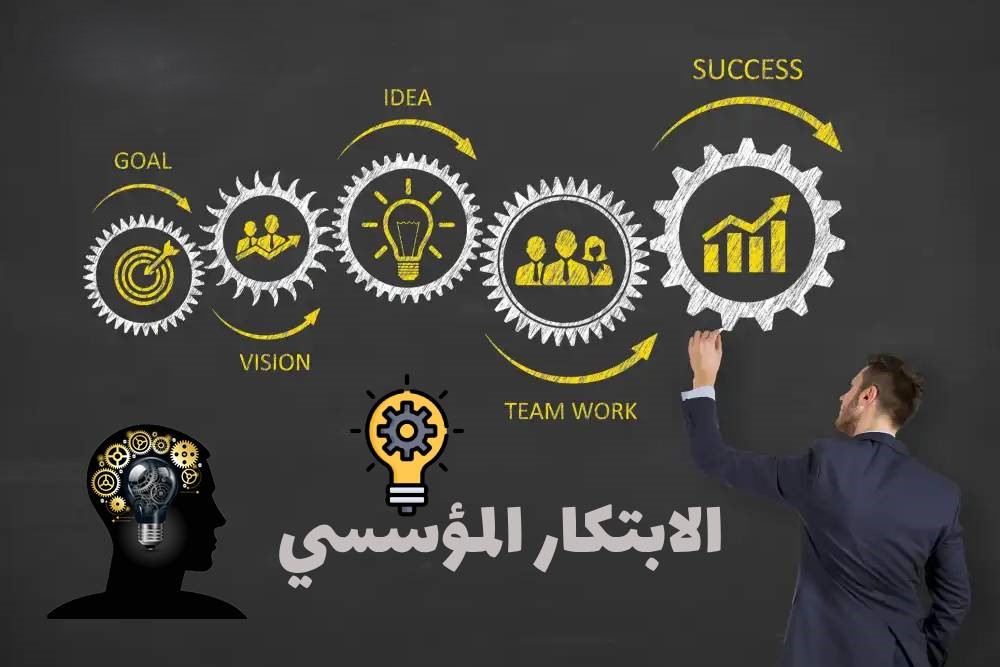


Innovative teams are no longer an optional extra in today’s business environment; they have become essential for the success and sustainability of organizations amidst increasing competition and rapid change. Therefore, companies today are increasingly investing in training as a strategic tool to build teams capable of creative thinking, adapting to change, and delivering sustainable long-term value.
From this starting point, the concept emerged Innovative work teams As one of the most important pillars upon which ambitious organizations rely, these teams do not merely execute tasks. On the contrary, it contributes to generating new ideas, improving processes, and developing business models. However, building innovative teams doesn’t happen automatically; it requires a genuine investment in ongoing training and development.
Therefore, this article focuses on The importance of training in building innovative work teams From a management and consulting perspective, explaining how systematic training can transform innovation from a theoretical slogan into a practical reality within organizations.
Recent transformations in the business environment and their role in fostering the need for innovation
To begin with, it must be noted that today’s business environment is radically different from what it was a few years ago. On the one hand, the pace of digital transformation has accelerated, and on the other hand, customer expectations have changed, becoming more discerning and demanding. Furthermore, new business models have entered the market, further complicating the competitive landscape.
Based on the above, the question is no longer: Do we need innovation?
The real question has become: How do we build innovative work teams capable of sustainably supporting innovation?
This is precisely where the role of training as a strategic tool becomes apparent, as it It provides a systematic framework through which skills can be developed, thinking patterns can be changed, and an organizational culture based on creativity can be built.
What is meant by innovative work teams in an institutional context?
In general, it indicates Innovative work teams are groups of employees working within an environment that encourages:
- Introducing new ideas
- Challenge the status quo
- Experimenting with unconventional solutions
- Learning from mistakes instead of punishing them
But in an institutional context, the concept is not limited to individual creativity, but extends to the ability of the team as a whole to transform ideas into tangible results that support the company’s goals.
Therefore, innovative work teams are characterized by several key elements, the most important of which are:
- Diversity of experiences and skills
- Clarity of roles and responsibilities
- Effective communication between members
- Administrative support and ongoing encouragement
- Innovation-focused training programs
Hence, it becomes clear that training is not a secondary element, Rather, it is the foundation upon which these teams are built.

Why have some organizations failed to build innovative work teams?
Although many organizations recognize the importance of innovation, a significant number fail to implement it effectively. This is due to… For several reasons, most notably:
- Relying on outdated skills that are no longer compatible with current changes
- Lack of specialized training programs for innovation
- Poor communication between departments
- Fear of failure or experimentation
- Resistance to change within teams
Therefore, the problem is not the lack of desire to innovate, but rather the lack of tools and mechanisms that actually support the building of innovative work teams.
Training as a strategic tool for building innovative work teams
When talking about training, some people think of it as just a supplementary activity or a routine procedure. However, the reality is quite different, especially when it comes to building innovative work teams.
Firstly: Training and changing thinking patterns
In many organizations, the fundamental problem is A mindset, not a lack of resources. That’s why modern training focuses on:
- Developing critical thinking
- Fostering creative thinking
- Encouraging questions
- Breaking traditional problem-solving paradigms
Through this approach, employees begin to view challenges as opportunities for innovation. Not obstacles.
Second: Training and building a common language within teams
Moreover, Training contributes to creating common language Among team members. When everyone receives the same concepts and tools, The collaboration process becomes smoother, and opportunities for collective innovation increase.
Therefore, work teams transform from separate groups into Integrated innovative work teams working towards a single goal.
Third: Training, confidence building, and empowerment
On the other hand, employees who receive ongoing training feel that the organization is investing in them. As a result, levels of trust and belonging increase, and individuals become more willing to offer new ideas without fear.
It is precisely here that innovation begins to emerge naturally within the teams.

The relationship between organizational training and competitive advantage
From a consulting perspective, it can be said that organizations that invest in targeted training to build innovative work teams achieve several strategic gains, the most important of which are:
- Improving decision-making speed
- Improving the quality of solutions provided
- Enhancing the ability to adapt to changes
- Creating a competitive advantage that is difficult to imitate
Over time, training transforms from an operational cost into a long-term investment in human capital.
Training and its role in supporting sustainable innovation
It is important to emphasize that innovation is not a temporary event, but an ongoing process. Therefore, building innovative teams requires sustainable training programs, not short-term initiatives.
Through continuous training:
- Skills evolve as the market evolves.
- Ways of thinking are constantly being updated
- Teams remain capable of innovation in the long term.
The most effective types of training for building innovative work teams
Having clarified the strategic role of training in Part 1, we now move on To a more practical point, which is: What types of training make a real difference in building innovative work teams within organizations?
In fact, not all training programs are equal in impact. For this reason, organizations need to choose specific types of training that are directly related to innovation, rather than settling for traditional courses that do not add tangible value.
Firstly: Design Thinking Training
Initially, design thinking is considered one of the most effective training approaches for building innovative work teams. This is because it focuses on understanding the problem from the customer’s perspective, and then moving to the stage of generating solutions in a creative and systematic way.
Through this type of training:
- Employees learn how to analyze customer needs in depth.
- Rapid experimentation is encouraged instead of long-term planning.
- Mistakes become part of the learning process
Therefore, work teams transform from task-executing teams to teams that think, innovate, and constantly test solutions.
Second: Training in institutional innovation and idea management
Moreover, Innovative work teams need specialized training in Managing ideas, not just generating them. Many organizations She has good ideas, but fails to turn them into actionable initiatives.
Therefore, this type of training focuses on:
- Evaluating ideas according to clear criteria
- Turning ideas into action plans
- Linking innovation to strategic goals
As a result, innovation becomes part of the daily work system, not a side activity.
Third: Technological training as a driver of innovation
In the age of digital transformation, one cannot talk about innovative work teams without addressing technology. On the one hand, technology provides new tools for innovation, and on the other hand, it presents challenges that require modern skills.
For this reason, technological training includes:
- Artificial intelligence and its practical applications
- Data analysis and decision making
- Automation and process improvement
- Digital tools for collaboration and teamwork
Thus, employees become able to employ technology not only to perform the work, but also to innovate new ways of doing it.
Fourth: Training in change management and reducing resistance
On the other hand, resistance to change is one of the biggest obstacles to innovation. However, this resistance can be reduced through customized training programs.
This type of training focuses on:
- Understanding the reasons for resistance to change
- Dealing with professional concerns
- Building a flexible mindset within teams
- Promoting the concept of lifelong learning
Over time, work teams begin to accept change as an opportunity for development, not a threat to stability.
Fifth: Training in innovative leadership
Innovative teams cannot be built without leaders with an innovative mindset. That’s why leadership training is a crucial element of any innovation strategy.
This training focuses on:
- Empowering leaders to motivate their teams
- Encouraging individual initiatives
- Containing failure and turning it into learning
- Creating a safe environment for exchanging ideas
Therefore, the leader becomes a supporter of innovation, not an obstacle to it.
The role of training in building a culture of innovation within institutions
It is important to note that innovation does not thrive in isolation. On the contrary, it requires a supportive organizational culture. This is where training plays a crucial role in fostering this culture over the long term.
How does training contribute to building an innovative culture?
- Firstly, training promotes the values of experimentation and openness.
- Secondly, it encourages employees to share ideas.
- Third, it links innovation to organizational goals.
- Finally, making continuous learning a part of daily work
Thus, work teams gradually transform into innovative work teams that operate with a unified mindset.
Practical training versus theoretical training
In building innovative teams, theoretical training alone is not enough. Practical and applied training must also be emphasized.
Why is practical training more effective?
- Because it simulates real-world challenges
- Because it encourages learning from experience
- Because it promotes collaboration among team members
- Because it links knowledge to direct application
As a result, training becomes more effective in supporting corporate innovation.
Practical examples of the impact of training on building innovative work teams
For example, Many global companies have designed training programs specifically for innovation. This led to improved performance and increased competitiveness.
- Technology companies have focused on continuous training in the field of artificial intelligence.
- Service companies have adopted design thinking to improve customer experience.
- Industrial companies have used training to develop more efficient processes.
Therefore, these experiments have proven that training is not a cost, but a strategic investment.
The relationship between training and measuring innovation within teams
Some may ask: How can the impact of training on innovative work teams be measured?
In fact, this can be done through several indicators, like:
- Number of new ideas submitted
- Speed of implementing initiatives
- Improved operational performance
- Employee satisfaction
- Customer satisfaction
Through these indicators, institutions can assess the effectiveness of training programs and continuously improve them.
Challenges facing organizations in training and building innovative work teams
Although many organizations recognize the importance of innovation, implementing effective training programs to build innovative teams faces a number of practical challenges. Therefore, it is essential to understand these challenges in order to address them realistically and thoughtfully.
Firstly: Limited budgets allocated for training
Often, some departments view training as an operational cost that can be reduced. But in reality, this thinking weakens the organization’s ability to innovate in the long run.
Therefore, the lack of sufficient investment in training directly affects the quality of work teams and their ability to develop.
Second: Resistance to change within work teams
On the other hand, some employees prefer stability and routine. For this reason, training related to innovation may be met with some reservation or rejection.
However, this obstacle can be overcome by:
- Involving employees in the design of training programs
- Explaining the practical benefits of training
- Linking training to career path development
Over time, resistance turns into acceptance, and then into active participation.
Third: The lack of link between training and strategy
In some organizations, training is carried out separately from strategic objectives. As a result, the impact of training on performance or innovation is not clearly visible.
Therefore, training programs should be:
- Related to the organization’s vision
- Compatible with growth objectives
- Designed to build innovative work teams that serve the overall strategy
The role of senior leadership in supporting training and building innovative work teams
It’s impossible to discuss innovative teams without addressing the role of leadership. Ultimately, leaders are the ones who determine the overall direction of the organization.
How does leadership support innovation through training?
- First, allocate the necessary resources.
- Secondly, encouraging lifelong learning
- Third, supporting new initiatives
- Finally, accept failure as part of the learning process.
Thus, leadership becomes a true enabler of innovation, not just a supervisory body.
How to design a comprehensive training program to build innovative work teams
In order for training programs to achieve their goals, they must It was designed systematically and thoughtfully. The basic steps are as follows:
1. Analyze needs accurately
Initially, skill gaps within teams must be identified. Based on that, the appropriate type of training is determined.
2. Designing customized training content
Then, programs are designed to suit the nature and culture of the organization. Instead of relying on general models.
3. Reliance on interactive methods
Moreover, It should be used:
- workshops
- Simulation
- Practical Cases
- collaborative learning
4. Impact measurement and continuous improvement
Finally, training results are measured using clear indicators. And then the programs are constantly being developed.

The impact of training on organizational performance and building long-term value
When effective training programs are implemented, results begin to appear gradually. For example:
- The quality of decisions improves
- The pace of innovation is increasing
- Employee satisfaction levels are rising
- Customer satisfaction is improving
Therefore, training becomes a key driver of organizational growth.
Frequently Asked Questions about Training and Building Innovative Teams (FAQ)
What is meant by innovative work teams?
Innovative work teams are teams that have the ability to think creatively, provide new solutions, and continuously improve processes and services.
Is it possible to build innovative work teams without training?
In reality, that is difficult to achieve. Training is the foundation that equips teams with the skills and tools necessary for innovation.
What are the best types of training to support innovation?
Design thinking, technology training, change management, and innovative leadership are among the most influential types.
How can the impact of training on innovation be measured?
Through indicators such as the number of new ideas, speed of implementation, improved performance, and employee satisfaction level.
What is the role of leadership in supporting innovative work teams?
Leadership plays a pivotal role in providing a supportive environment, encouraging experimentation, and supporting continuous learning.
Training as a strategic investment in innovative work teams
In conclusion, it can be said that building Innovative work teams are no longer an optional extra, but a strategic necessity. In today’s business world, and with the accelerating pace of change, organizations that invest in training and development remain the most adaptable and innovative.
Through well-designed training programs, conscious leadership, and a supportive culture, teams can be transformed into true engines of creativity and excellence.
If you are looking to build innovative teams capable of leading change and achieving sustainable growth within your organization, then Reins We offer you integrated training and consulting solutions, specifically designed to meet the needs of modern companies and institutions.