

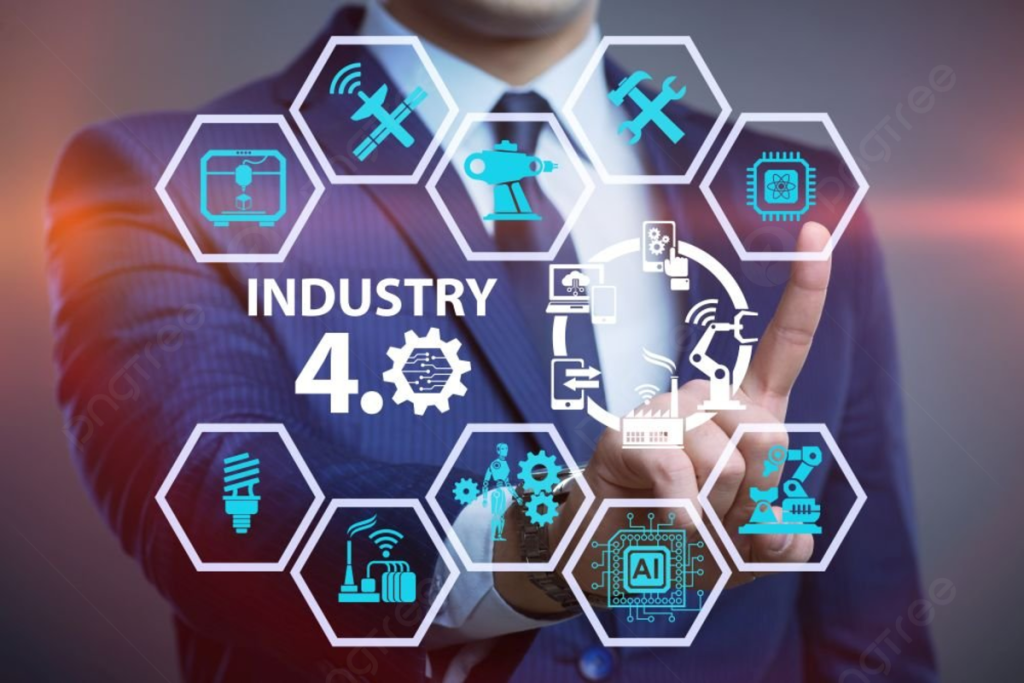
A new era is reshaping the world.
The Fourth Industrial Revolution and innovation are key elements in shaping the future of modern technology, as the world undergoes a radical transformation based on artificial intelligence, the Internet of Things, and big data to develop new models of work and production.
We are living in a period of radical transformation known as the Fourth Industrial Revolution, an unprecedented era that is rapidly reshaping our daily lives. Innovation is no longer a secondary option; it has become an essential requirement for any organization striving to compete and excel. Furthermore, the tremendous technological advancements in fields such as artificial intelligence, the Internet of Things, robotics, and blockchain are profoundly reshaping global economies.
Therefore, this article attempts to analyze the dimensions of the Fourth Industrial Revolution, in addition to clarifying its impact on corporate innovation, and reviewing the best ways for companies to adopt its modern technologies. Moreover, We will highlight the most prominent challenges, and then explain how Saudi Arabia can benefit from this revolution within its ambitious 2030 vision.
What is the Fourth Industrial Revolution?
The Fourth Industrial Revolution represents a unique blend of advanced technologies that merge the physical and digital worlds. While previous revolutions relied on steam, then electricity, and then computing, the Fourth Industrial Revolution is based on artificial intelligence, big data, and smart operations, making its impact broader and more profound.
Furthermore, this revolution is characterized by rapid innovation; technological development no longer takes years as it once did, but rather happens in months or even weeks. Therefore, organizations that fail to keep pace may quickly find themselves out of the competition.
Key technologies of the Fourth Industrial Revolution and their impact on innovation
1. Artificial Intelligence (AI)
Artificial intelligence is one of the main drivers of the modern revolution. For example, It can analyze big data, predict behaviors, and provide faster and more accurate solutions.
Its main benefits:
Improving the decision-making process.
Reducing operational errors.
Automating routine tasks.
Developing personalized customer experiences.
Moreover, Artificial intelligence contributes to creating a smarter work environment that relies on data rather than intuition.
2. Internet of Things (IoT)
The Internet of Things connects the world through smart devices that exchange data in real time. As a result, organizations are able to make accurate decisions based on immediate information.
Examples of its uses:
Monitoring industrial equipment.
Monitoring energy consumption.
Developing smart homes.
Improving smart cities.
In addition, IoT helps reduce waste and improve productivity.
3. Advanced robots
Robots have evolved significantly, no longer limited to simple mechanical tasks. They have become capable of learning and interacting.
Conversely, various industries benefit from the capabilities of robots in:
Increase productivity.
Increased quality.
Reduce errors.
Performing dangerous work.
Most importantly, robots work alongside humans in an integrated environment.
4. Blockchain technology
Despite its popularity in the cryptocurrency sector, blockchain technology offers benefits far beyond that. It provides high transparency and prevents manipulation.
Its uses:
Smart contracts.
Data protection.
Improving supply chains.
Strengthening trust between the parties.
Therefore, this technology has become an essential element for every organization seeking digital security.
5. 3D printing
3D printing is a true revolution in the industrial field. In addition to reducing costs, this technology enables the manufacture of customized products that meet customer needs.
Its advantages:
Faster production.
High flexibility.
Developing prototypes is easy.
Supporting innovation across various sectors.
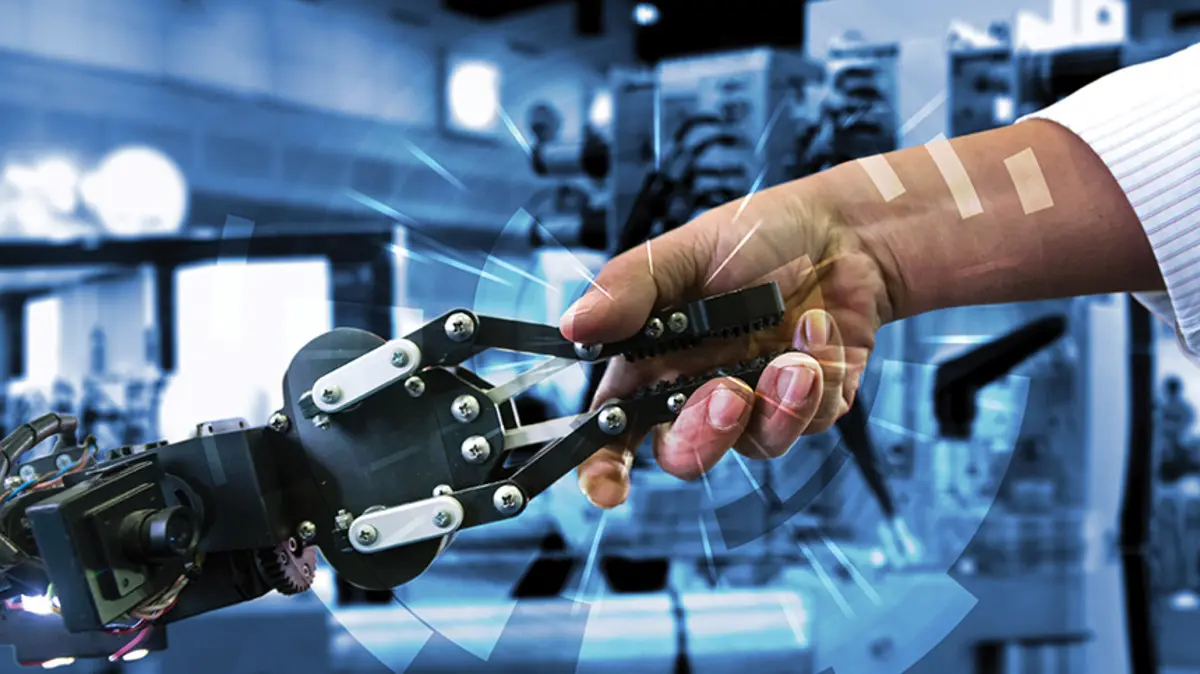
The impact of the Fourth Industrial Revolution on corporate innovation
1. Promoting innovation within organizations
Technology has become a key driver for launching new products. Moreover, Big data helps organizations predict customer behavior and identify their true needs.
2. Improving operational processes
For example, IoT enables factories to detect faults before they occur, thus reducing sudden downtime.
In addition, smart systems contribute to reducing operating costs and increasing efficiency.
3. Workforce development
On the other hand, Automation has led to the disappearance of some traditional jobs, but it has created new jobs that rely on creativity, analysis, and technical skills.
4. Supporting sustainability
In fact, the technologies of the Fourth Industrial Revolution contribute directly to achieving sustainability goals. For example, Artificial intelligence systems work to reduce energy consumption and optimize resource utilization.
How can companies adopt Fourth Industrial Revolution technologies?
1. Investing in digital infrastructure
Without a robust infrastructure, modern technologies cannot be adopted. Therefore, cloud computing and big data are the foundation of digital transformation.
2. Developing employee skills
In addition to technology, the human element plays a crucial role. Therefore, ongoing training programs must be provided that include:
Programming
Data analysis
Cybersecurity
creative thinking
3. Building strategic partnerships
For example, Companies can collaborate with leading technology companies to accelerate the transformation process.
4. Promoting a culture of innovation
Conversely, institutions that lack a culture of innovation remain unable to benefit from technology, no matter how advanced.
Real-world examples of Fourth Industrial Revolution applications
Healthcare sector
Faster diagnosis via artificial intelligence
3D printing of prosthetic limbs
Precision surgical robots
In addition, these technologies have helped to reduce medical errors.
manufacturing sector
Smart factories
predictive maintenance
Production robots
As a result, production became more efficient and of higher quality.
Financial services
Blockchain to enhance security
Artificial intelligence for risk analysis
Automation to improve customer experience
Challenges facing the Fourth Industrial Revolution
1. High cost
Despite the significant benefits, small businesses are finding it difficult to afford the cost.
2. Data security threats
Despite progress, cyberattacks have become more sophisticated.
3. Its impact on jobs
In contrast, modern technologies require retraining of the workforce.

The Fourth Industrial Revolution in Saudi Arabia and Vision 2030
1. Neom City
NEOM represents an advanced model for smart cities that rely on artificial intelligence and the Internet of Things.
2. Supporting Innovation
Moreover, The Kingdom supports startups through business incubators and accelerators.
3. Education development
As a result, the greatest focus has been placed on teaching digital skills.
Are you ready for the future?
Ultimately, the Fourth Industrial Revolution is a golden opportunity, not just a challenge. Therefore, organizations must prepare to adopt technology, train their employees, and cultivate a culture of continuous innovation to compete in the digital age.
Collaborate with Reins now
Do you want to bring your organization into the era of the Fourth Industrial Revolution?
Reins is ready to provide integrated digital transformation solutions, as well as build smart systems that help you increase productivity and improve performance.
Start your journey today, and connect with Reins to become part of the future!