
In a business environment characterized by constant change and rising customer expectations, traditional decisions are no longer sufficient to deliver long-term results. For this reason, companies today are seeking more flexible, realistic, and complex methodologies. This is precisely where design thinking emerges as a practical framework that helps organizations understand problems in depth before jumping to solutions.
In fact, many successful companies rely on this approach not only because it is “creative,” but also because it is practical, applicable, and reduces the risks associated with assumption-based decisions. Thus, design thinking has become a strategic tool used by executive management, not just a working method for creative teams.
In this article, we will provide a comprehensive guide explaining the concept of design thinking, its stages, benefits, applications in the business environment, and common mistakes when using it. In addition, we will explain how companies can practically benefit from it to support growth and decision-making.
What is design thinking and why has it become an essential tool for businesses?
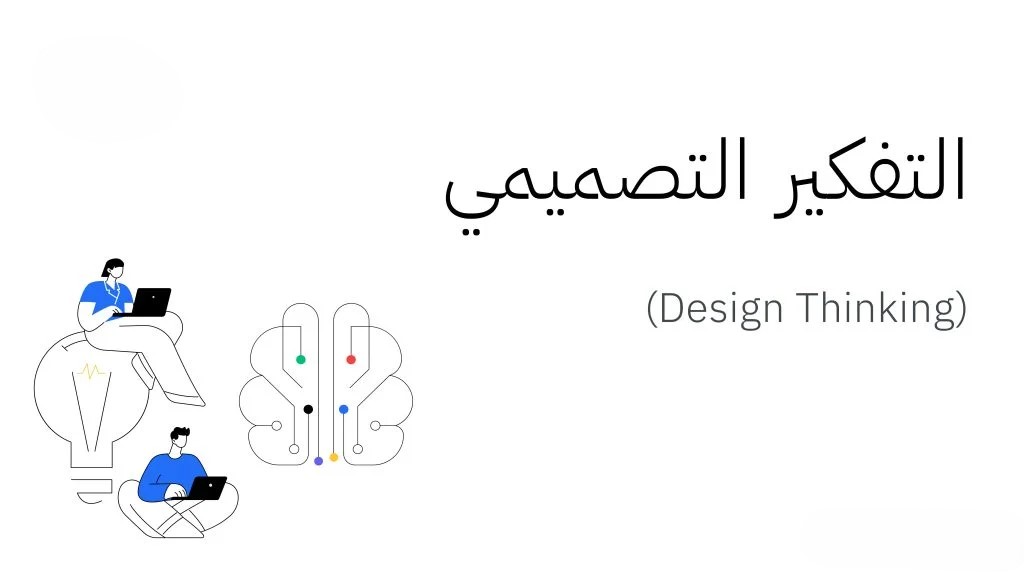
Simply put, design thinking is a structured methodology for solving complex problems by understanding the user, analyzing the context, and then progressively testing solutions. Unlike traditional approaches that start with the solution, this approach begins with the problem itself.
Most importantly, design thinking is not based solely on intuition, but combines:
human understanding
logical analysis
rapid experimentation
Continuous improvement
As a result, companies can build realistic solutions based on actual needs, not internal perceptions.
Why do traditional solutions fail when faced with complex problems?
For a long time, companies relied on linear planning, theoretical studies, and long-term forecasts. However, reality has changed. Markets have become faster, customers more informed, and technology more influential.
For this reason:
Some products fail despite their high quality of execution.
Strategies that are well-thought-out on paper don’t work.
The same mistakes are repeated despite experience.
This is where design thinking comes in, because it deals with reality as it is, not as we wish it to be.
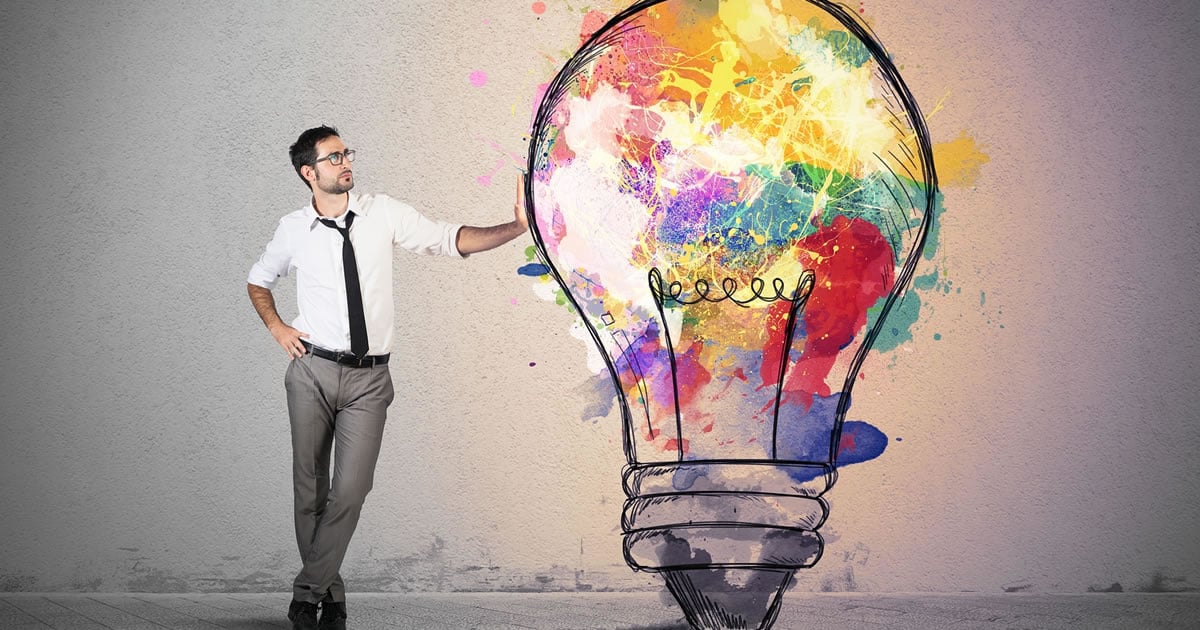
The difference between traditional thinking and design thinking methodology
To understand the value of this approach, it is important to compare the two methods:
Traditional thinking starts with the solution, while design thinking starts with the problem.
Traditional thinking is based on historical data, while the modern approach is based on actual behavior.
Traditional thinking seeks perfection from the outset, while design thinking accepts gradual improvement.
Traditional thinking fears failure, while this approach considers it a learning phase.
Therefore, decision-making becomes more flexible and less risky.
The five stages of design thinking
1. Empathy with the user
Initially, the focus is on understanding the user deeply. Instead of simply listening to what the customer says, the focus is on analyzing what they actually do.
This stage includes:
In-depth interviews
Observing behavior
Customer journey analysis
Without this step, solutions become mere assumptions.
2. Identify the problem precisely
After gathering insights, the next step is to formulate the problem clearly and specifically. This way, the team avoids addressing the symptoms instead of the root causes.
For example:
Instead of saying:
We want to improve the service.
The problem is defined as follows:
New customers often struggle to understand the initial steps during registration, leading to early withdrawal.
3. Generating ideas
Once the problem is clear, we move to the creative stage. Here, a large number of solutions are generated without immediate evaluation.
At this stage:
Diversity is more important than perfection.
Quantity leads to quality
There is no wrong answer
4. Building prototypes
Instead of implementing the final solution directly, a simplified model is created first.
may be:
Primary interface
Experimental scenario
demo
As a result, the idea is tested quickly and at a low cost.
5. Testing and Improvement
At this stage, the model is tested with real users, and then the feedback is analyzed.
Based on the results:
The solution is being improved
Or redefining the problem
Or take a step back
Benefits of design thinking for companies and organizations
When applied correctly, this approach yields tangible benefits, most notably:
Improving customer experience
Reducing the cost of wrong decisions
Accelerating innovation
Enhancing team collaboration
Supporting fact-based decision-making
For this reason, global consulting firms adopt this framework as part of their core services.
Applying design thinking in a business environment
In developing services
It helps with:
Simplifying the customer experience
Reducing friction points
Increased satisfaction levels
In building the strategy
In addition, it can be used to test new business models before scaling up.
In digital transformation
When combined with technology, it facilitates the adoption of new systems and reduces resistance to change.
Common mistakes when applying design thinking
Despite its effectiveness, some companies still make mistakes. like:
Applying it as a temporary activity
Ignore the empathy stage
Rushing to choose a solution
Lack of management support
Therefore, it should be treated as an ongoing culture, not as a transient tool.
Practical examples from the business environment
A company redesigned the sign-up experience, resulting in a 30% increase in conversions.
A consulting firm tested a new offer before launching it, and thus avoided significant losses.
A startup company that adopted prototypes, which allowed it to reach the market faster.
How does your company begin implementing design thinking?
To get started practically:
Train the team on the basics
Start with one clear problem
Engage customers early
Test before expanding
Consult experts when needed
FAQ – Frequently Asked Questions
What is meant by design thinking?
It is a problem-solving framework that puts the user at the center of the decision.
Is it suitable for all types of companies?
Yes, both startups and large companies.
Does it require a high budget?
On the contrary, it aims to reduce costs through early testing.
What is its relationship to innovation?
It is the systematic path that leads to sustainable innovation.
In a rapidly changing world, design thinking has become an indispensable strategic tool. It enables companies to deeply understand their customers, build practical solutions, and ultimately make decisions that support sustainable growth with greater confidence.
The next step is smart
If you want to implement this approach within your company in a practical and well-thought-out manner, Reins offers consulting support that helps you transform challenges into real growth opportunities.
With its expertise in innovation and strategy, Reins enables you to build actionable solutions based on a deep understanding of the market and customers.
Connecting with Reins could be a turning point in how your company thinks and makes decisions.