

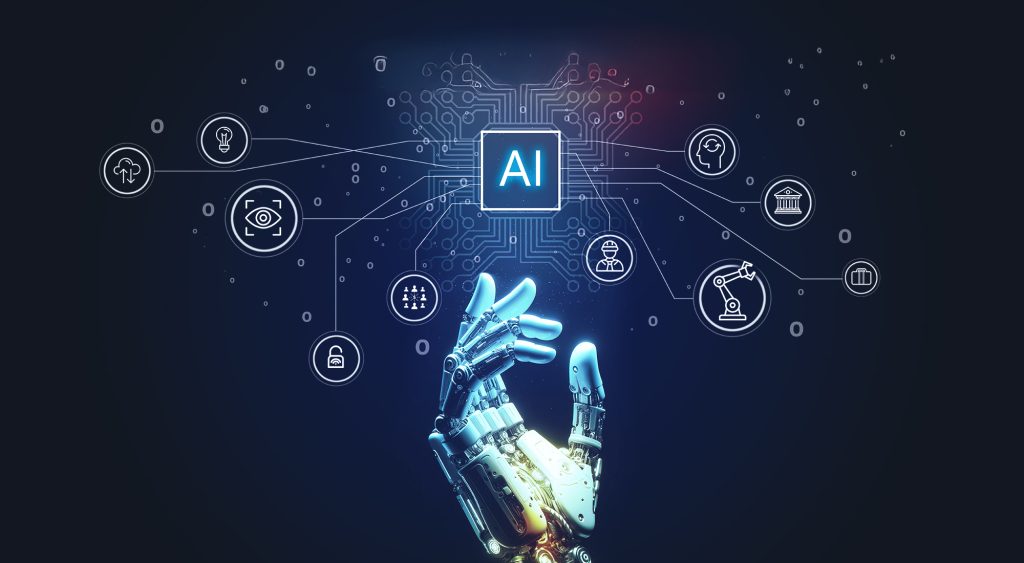
In a world undergoing rapid digital transformation, relying on traditional methods is no longer sufficient to keep pace with competition. Therefore, organizations are increasingly adopting modern technologies that enhance efficiency and foster innovation. In this context, artificial intelligence (AI) stands out as a cornerstone of digital transformation strategies, serving as the starting point for building intelligent systems capable of making decisions and analyzing data effectively.
Moreover, Organizations that invest early in understanding and applying the fundamentals of artificial intelligence are better equipped to adapt to future changes and achieve a sustainable competitive advantage. Therefore, mastering these fundamentals is a crucial step for any organization seeking to lead in the digital age.
An introduction to the world of artificial intelligence
To begin with, artificial intelligence refers to the ability of systems to mimic human behavior, such as thinking, analyzing, and making decisions. However, it goes beyond that; it also includes continuous learning from data and improving performance over time.
On the other hand, Modern organizations rely on these technologies to speed up processes and reduce errors. In addition, these systems significantly improve the customer experience.
Therefore, understanding the fundamentals of artificial intelligence represents a real starting point towards building an integrated digital system.
Why is artificial intelligence a strategic necessity?
In fact, organizations face increasing challenges related to competition and rapid change. Therefore, it has become essential to rely on smart solutions that help in making accurate decisions.
For example:
- Customer behavior can be analyzed more deeply.
- Future trends can also be predicted.
- In addition, operational processes can be improved.
Therefore, these capabilities give organizations a clear competitive advantage.
The basic components of artificial intelligence systems
To understand the picture more clearly, one must identify the main elements upon which these systems are based.
Firstly: Data
Data is the cornerstone of any intelligent system. Therefore, data quality plays a crucial role in determining the accuracy of the results.
secondly: algorithms
Algorithms analyze data and extract patterns. From this, models capable of making decisions are built.
Third: Infrastructure
In addition, systems need a robust infrastructure to process data efficiently. This is where cloud computing comes in.
Fourth: Models
Finally, models are used to perform various tasks such as prediction and classification.

Machine learning: The main engine of artificial intelligence
Machine learning is considered one of the most important technologies currently in use. It allows systems to learn from data without direct intervention.
On the other hand, it is divided into:
- التعلم الموجه
- Undirected learning
- Enhanced learning
Despite their differences, these types all work to improve performance over time.
Deep Learning: The Revolution Within Artificial Intelligence
In contrast, deep learning represents an advanced stage that relies on neural networks. Thanks to this, complex data such as images and videos can be analyzed.
Therefore, it became possible to develop advanced applications in various fields.
Branches of artificial intelligence and its applications
On the other hand, This field branches into several specializations:
Natural Language Processing
It helps in understanding texts and interacting with users.
Computer vision
The systems are capable of analyzing images and videos.
robots
It is used in industry and services.
Expert systems
It mimics human decisions in specific areas.
Artificial intelligence applications in various sectors
Financial sector
It helps in risk analysis and fraud detection.
Health sector
يساهم في تحسين التشخيص وتطوير العلاج.
Smart cities
It helps in managing resources efficiently.
government sector
It contributes to improving services and speeding up procedures.
AI governance and its importance
With the increasing reliance on these technologies, it has become essential to establish clear governance frameworks. Therefore, AI governance aims to:
- Ensuring transparency
- Data protection
- Minimizing risks
Furthermore, this governance helps build trust between institutions and users.
Ethics of artificial intelligence
It is also important to consider the ethical aspects when using these technologies. For example:
- Avoid bias in the data
- Privacy protection
- Ensuring justice
Therefore, adhering to these principles enhances the success of technological projects.
Challenges facing the application of artificial intelligence
Despite the significant benefits, there are challenges such as:
- Lack of skills
- High costs
- Data management difficulty
However, these challenges can be overcome through good planning.
How do organizations begin their journey?
To begin the transformation journey, the following steps can be followed:
- Assessing the current situation
- Setting goals
- Choosing the right solutions
- Project implementation
- Measuring results
In addition, investment should be made in employee training.
Successful case studies
In fact, there are many organizations that have successfully used artificial intelligence to achieve amazing results. For example, Some companies have been able to significantly reduce costs through automation.
Government agencies have also been able to significantly improve the quality of services.
The future of artificial intelligence
This field is expected to continue growing. Therefore, organizations starting now will be in a strong position.
Moreover, He will play a major role in:
- Economic development
- Supporting Innovation
- Improving quality of life
Reins: Your partner towards smart digital transformation
In this context, Reins comes as a strategic partner that helps organizations implement smart solutions efficiently.
Where it is presented:
- Specialized consultations
- Customized solutions
- Ongoing support
Therefore, it ensures tangible results.
🚀 Start now with Reins
Don’t postpone digital transformation…
Frequently asked questions
What is artificial intelligence?
It is a technology that enables systems to mimic human thinking.
Can it be applied in all sectors?
Yes, it can be used in most fields.
What is the most important element for its success?
High-quality data.
Is it expensive?
The start may be expensive, but the payoff is huge.
How do I begin?
Start by evaluating the data and setting goals.
In conclusion, artificial intelligence represents a genuine opportunity for organizations to achieve excellence. Therefore, adopting these technologies is no longer an option, but a strategic necessity.