
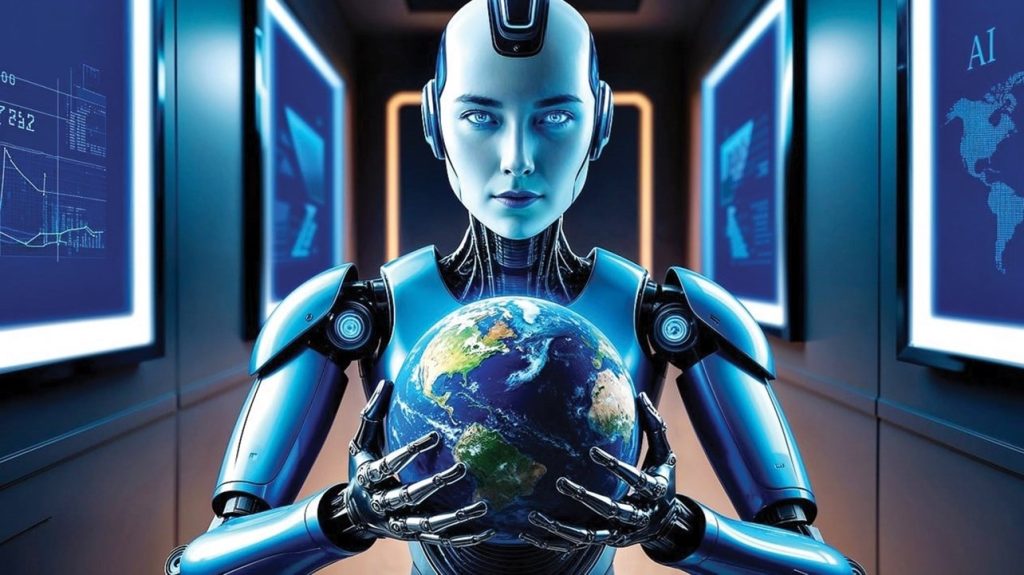
Artificial intelligence (AI) concepts are among the most important pillars upon which organizations rely to achieve digital transformation and build a more efficient and innovative future. With the rapid pace of technological development, understanding AI concepts is no longer optional; it has become a strategic necessity for any entity seeking to make smart, data-driven decisions.
Moreover, Delving into the concepts of artificial intelligence not only helps in understanding the technology, but also enables organizations to apply it safely and effectively, especially when combined with global standards such as ISO, which ensure quality, governance, and reliability.
In recent years, artificial intelligence has ceased to be a passing technological trend and has become a fundamental element in shaping the future of institutions and governments. With this rapid transformation, an important question arises:
How can we understand the true foundations upon which this field is based?
In fact, grasping the concepts of artificial intelligence is the first step toward building successful digital strategies. Therefore, it’s not just about using the tools, but about a deep understanding of the mechanisms, models, and governance frameworks that govern these technologies.
Furthermore, integrating artificial intelligence with global standards such as ISO ensures a balance between innovation and security, which is what modern organizations need today.
What is artificial intelligence?
Simply put, artificial intelligence refers to the ability of computer systems to mimic human thought processes. However, this concept encompasses more than just executing commands; it also includes learning, analysis, and decision-making.
On the other hand, These systems rely primarily on data, analyzing it and extracting patterns that help predict the future or improve performance.
Therefore, understanding these fundamentals gives organizations the ability to use technology more intelligently and effectively.
Types of artificial intelligence
Narrow artificial intelligence
Initially, this type is currently the most widespread. It is designed to perform specific tasks such as data analysis or responding to customers.
General artificial intelligence
In contrast, this type represents the expected future, as it possesses the ability to think and learn in a manner similar to humans across multiple fields.
Therefore, knowing the difference between the two types helps organizations determine the appropriate level of investment.
Machine learning: the basic engine
When discussing intelligent systems, machine learning cannot be ignored. It represents the true heart of most modern solutions.
Firstly: Supervised learning
It relies on clear and categorized data. Therefore, it is used in forecasting such as financial analysis.
secondly: Unsupervised learning
On the contrary, this type works without categorized data, which helps in discovering hidden patterns.
Third: Enhanced learning
In this context, the system learns through trial and error, making it suitable for interactive systems.
Fourth: Deep Learning
Finally, it uses neural networks to analyze complex data, such as images and sound.
Therefore, understanding these types opens the door to advanced applications.

Advanced concepts in artificial intelligence
Natural Language Processing
It allows systems to understand human language. Therefore, it is used in chatbots.
Computer Vision
The systems are capable of analyzing images and videos. In addition, it is involved in fields such as medicine and security.
generative artificial intelligence
Currently, it has become one of the most important trends, as it can create entirely new content.
proxy intelligence
On the other hand, It represents the next generation, as it can make decisions and carry out tasks independently.
Why do organizations need to understand these concepts?
In fact, simply buying technology is not enough. It must be understood to maximize its benefits.
Firstly, a deep understanding helps in making better strategic decisions.
Secondly, it contributes to reducing operating costs.
Third, it enhances the quality of services.
Moreover, it enables organizations to adapt to future changes more quickly.
The profound role of ISO certifications in artificial intelligence
Here we come to a very important point, which is the relationship between artificial intelligence and ISO standards.
Why is ISO important?
Initially, intelligent systems rely heavily on data. Therefore, any flaw in security or quality could lead to disastrous consequences.
Therefore, ISO standards come to provide a clear framework that ensures:
- Safety
- Quality
- Transparency
- Compliance
Key ISO standards related to artificial intelligence
ISO 27001 – Information Security
It protects data from being hacked, which is essential for any smart system.
ISO 27701 – Privacy Protection
Ensuring proper handling of personal data.
ISO 42001 – Artificial Intelligence Management
This standard represents a qualitative leap, as it focuses on the governance of smart systems.
ISO 9001 – Quality
It helps improve processes and ensure continuity of performance.
How does ISO affect project success?
On the one hand, it reduces technical risks.
On the other hand, it enhances customer confidence.
In addition, it helps in:
- Reducing bias
- Improving model accuracy
- Ensuring regulatory compliance
Therefore, combining artificial intelligence and ISO is not a luxury, but a necessity.
Challenges facing institutions
Despite the benefits, there are several challenges:
First, a lack of good data
Second, model bias
Third, weak capabilities
Fourth, security risks
However, these challenges can be overcome through proper planning and adherence to standards.
Practical steps to adopt artificial intelligence
To begin a successful journey, clear steps must be followed:
First, define the objectives.
Next, evaluate the data.
Then, select the appropriate tools.
Finally, implement governance and standards.
In this way, effective and sustainable results can be achieved.
Why is Reins your ideal partner?
In a market full of solutions, you need a partner who understands the details, not just the tools.
Reins Company presents:
- Specialized consultations
- Customized solutions
- Support in the ISO application
- Developing secure systems
Therefore, cooperating with them gives you a real competitive advantage.
🚀Start now
Do you want to take your organization to a new level of intelligence and efficiency?
Don’t wait… the future starts now.
Frequently asked questions
What is artificial intelligence?
It is a technology that enables systems to think and learn like humans.
Can it be applied in government?
Yes, and it helps to greatly improve services.
What is the importance of ISO?
It guarantees safety, quality, and reliability.
Is artificial intelligence safe?
Yes, provided that governance standards are applied.
Ultimately, understanding the theoretical and applied foundations of artificial intelligence is crucial to the success of any organization. By integrating these concepts with ISO standards, an ideal balance between innovation and stability can be achieved.
Start today, Invest in knowledge, and choose the right partner… because success in the digital age starts with a correct understanding.