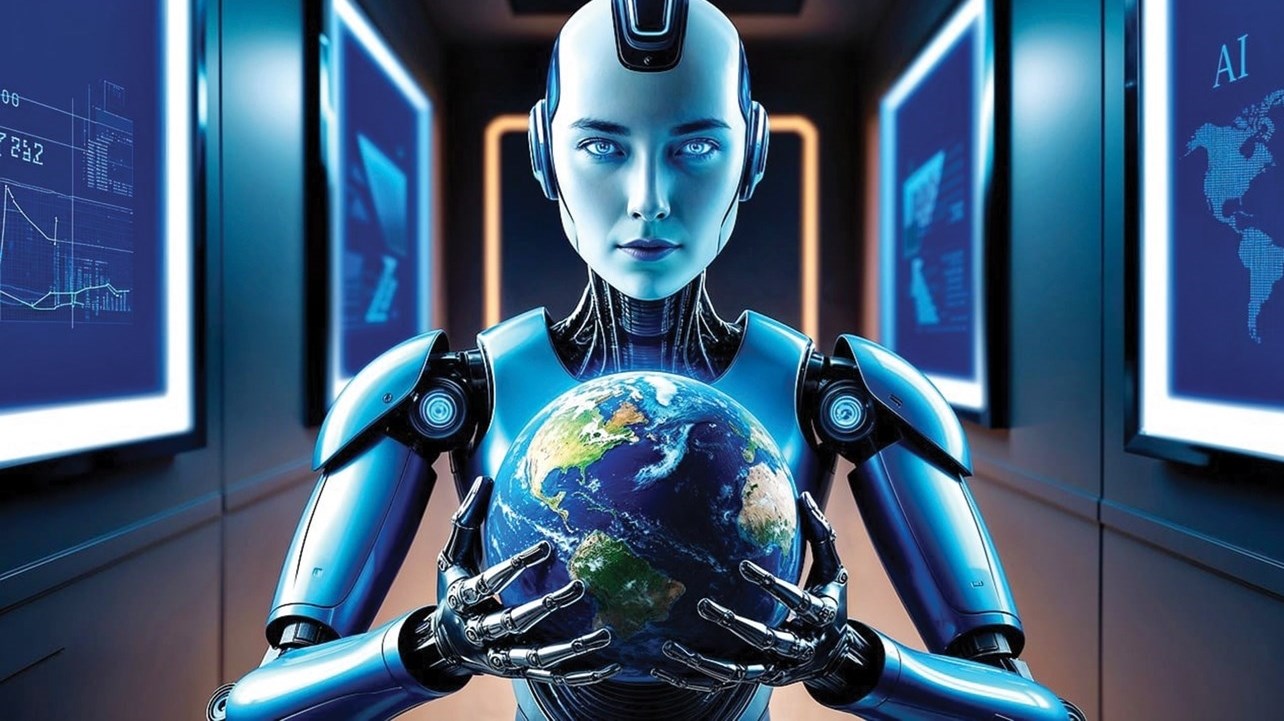


In light of rapid digital transformation, artificial intelligence technologies have become essential in reshaping the future of business and decision-making within modern organizations. Relying on traditional methods is no longer sufficient; adopting smart solutions is now a necessity for achieving efficiency and competitiveness.
With the increasing reliance on data, these technologies play a pivotal role in analyzing information, identifying patterns, and supporting strategic decisions. Therefore, organizations are increasingly investing in this area to ensure growth and sustainability in a rapidly changing business environment.
Why has artificial intelligence become a necessity today?
In recent years, the world has witnessed an unprecedented digital transformation, with data becoming the primary driver of decision-making. With this rapid change, relying on traditional methods is no longer sufficient to achieve success or remain competitive.
Thus, artificial intelligence technologies have emerged as one of the most important tools that modern organizations rely on to enhance efficiency and achieve growth. Moreover, these technologies have become a fundamental element in building digital transformation strategies, especially in Saudi Arabia, which is steadily progressing towards global leadership.
Therefore, understanding these technologies is no longer a luxury, but a necessity for every organization that seeks excellence.
What is artificial intelligence?
Artificial intelligence refers to the ability of computer systems to mimic human thinking, such as learning, analysis, and decision-making. Furthermore, these systems can improve their performance over time based on data.
Moreover, These systems help organizations to:
- Analyzing massive amounts of data quickly
- Discovering hidden patterns
- Making more accurate decisions
- Improving customer experience
Key technologies driving digital transformation
1. Machine learning
Initially, machine learning was one of the most important methods used in data analysis. Systems can learn from past experiences without the need for direct programming.
For example:
- Predicting customer behavior
- Detecting fraudulent activities
- Improving marketing campaigns
Consequently, its use has become widespread in banks and e-commerce companies.
2. Deep Learning
On the other hand, Deep learning is an advanced development based on neural networks. It is used to process complex data such as images and audio.
In addition, it is used in:
- facial recognition
- Video analysis
- Voice assistants
3. Natural Language Processing
This technology also allows systems to understand and interact with human language. Therefore, it is widely used in customer service.
Some of its most prominent applications include:
- Chatbots
- Customer opinion analysis
- Automated response to inquiries
4. Computer Vision
As for computer vision, it enables systems to analyze images and videos with high accuracy.
For example:
- Surveillance systems
- Medical X-ray analysis
- Product quality inspection
5. Smart Automation
Finally, automation helps to perform repetitive tasks quickly and efficiently. Thus, it saves time and effort and reduces human error.

Artificial intelligence applications in various sectors
Health sector
In the healthcare field, these technologies have significantly improved the quality of services. Medical data can now be analyzed quickly, aiding in early diagnosis.
In addition:
- Improving X-ray accuracy
- Reducing medical errors
- Supporting doctors in decision-making
Energy sector
Artificial intelligence is also being used to manage resources more efficiently.
For example:
- Consumption forecasting
- predictive maintenance
- Reducing waste
government sector
On the other hand, governments rely on these technologies to improve digital services.
Therefore:
- Expediting procedures
- Improving the citizen experience
- Supporting decision-making
Commercial sector
In commerce, these technologies help in understanding customers better.
In addition:
- Providing customized recommendations
- Improving advertising campaigns
- Increase in sales
Challenges facing institutions
Despite the significant benefits, there are some challenges that must be addressed.
Firstly: Data protection
These systems rely on data, which requires strong security.
secondly: Lack of experience
Organizations need qualified personnel to manage these systems.
Third: Cost
The start may be expensive, but the long-term return is substantial.
How do you begin implementing artificial intelligence technologies?
To begin the digital transformation journey, it is preferable to follow clear steps:
First, define your goals precisely.
Next, analyze the available data.
Then choose the appropriate technology.
In addition, he collaborated with a specialized entity.
Finally, start with a pilot project before expanding.
🚀 Reins: Your partner in smart transformation
If you are looking for a practical and professional execution, Reins provides you with the right solutions to help you achieve your goals.
Why choose Reins?
- Practical experience in the market
- Customized solutions
- Full support from start to finish
- Commitment to safety and quality
👉 Start now with Reins and leverage the power of artificial intelligence to grow your business
🚀 Contact us today to turn your data into smart decisions and tangible results
Frequently Asked Questions
Is artificial intelligence suitable for all companies?
Yes, it can be applied in different sectors and in different sizes.
What is its main benefit?
Improving efficiency and reducing costs.
Does it require large investments?
Not always, as there are flexible solutions to suit all budgets.
How do I begin?
Start by identifying your needs and then collaborate with a specialized company like Reins.
Ultimately, artificial intelligence represents a genuine opportunity for any organization seeking growth and excellence. With its continued development, its adoption will become indispensable.
Therefore, making the decision now is the most important step towards the future.