


In light of the rapid technological advancements the world is witnessing today, digital transformation has become one of the most important factors determining the success and sustainability of organizations in the modern business environment. Indeed, relying on traditional methods is no longer sufficient to keep pace with the rapid changes in global markets; therefore, organizations are striving to adopt digital technologies to improve their operations and develop their services.
Furthermore, the proliferation of modern technologies such as artificial intelligence, cloud computing, and big data analytics has fundamentally changed the way organizations operate. As a result, companies can completely redesign their business models to be more agile and efficient.
This comprehensive guide will explore the concept of digital transformation in detail, including its importance, benefits, phases, and implementation strategies within organizations. We will also discuss its role in various sectors such as education and government, and examine the digital transformation experience in Saudi Arabia within the framework of Vision 2030.
What is digital transformation?
Definition of digital transformation
Digital transformation refers to the process of using digital technologies to redesign processes, services, and business models within organizations, with the aim of improving operational efficiency, enhancing innovation, and delivering greater value to customers.
In other words, it can be defined as the transition of institutions from traditional paper-based methods and manual procedures to a digital environment based on smart systems and modern technologies.
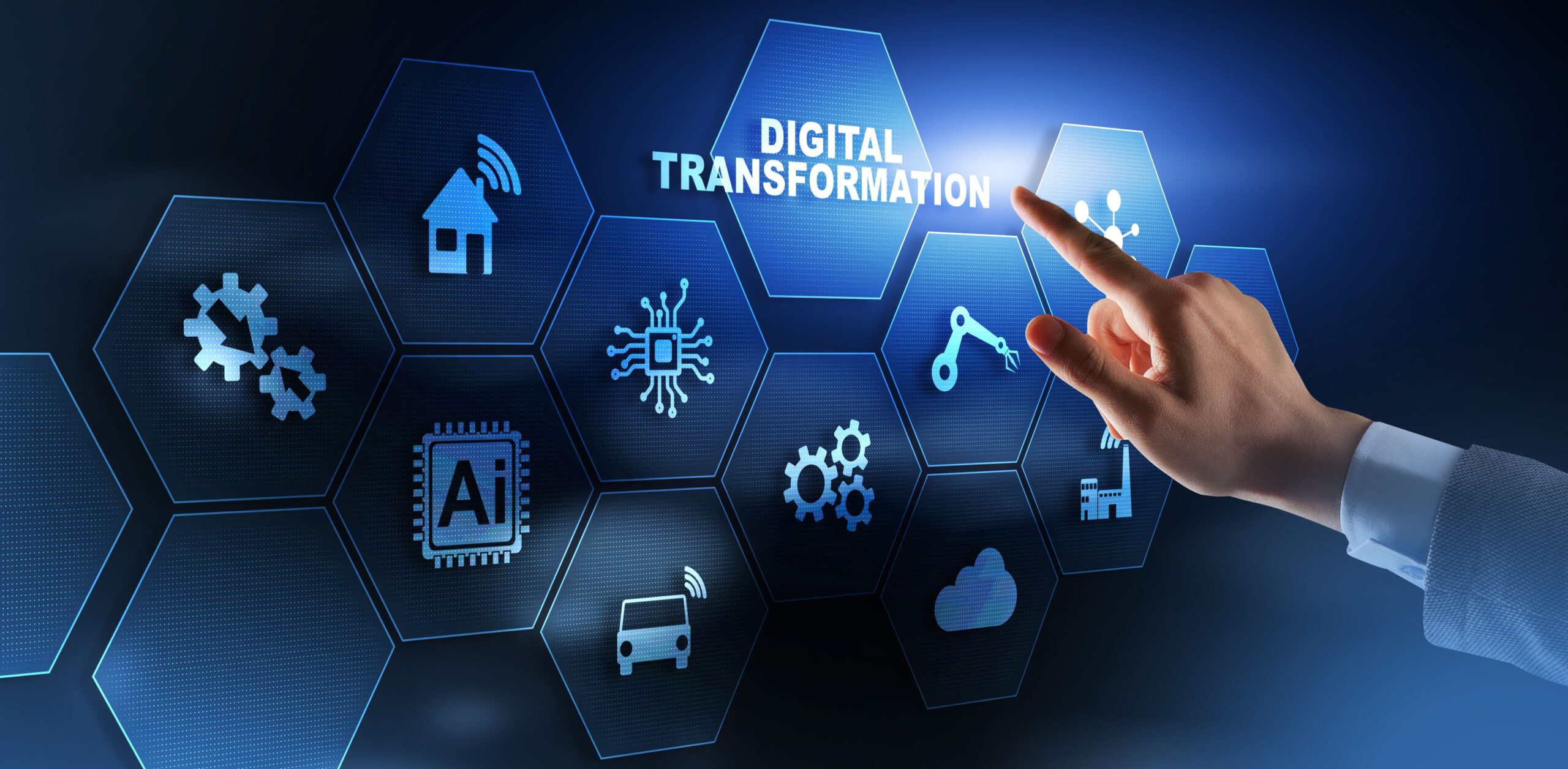
For example, digital transformation includes the use of technologies such as:
artificial intelligence
Cloud computing
Big data analysis
Internet of Things
Automation and robotics
Through these technologies, organizations can improve performance speed and reduce human errors, and they can also provide more advanced services that better meet customer needs.
The difference between digitization and digital transformation
Digitalization and digital transformation are often confused, but in reality there is a clear difference between the two concepts.
Digitization means converting information from paper form to digital form.
Digital transformation means completely redesigning processes and business models using technology.
For example:
Converting paper files into electronic files is called digitization.
Creating an integrated system for managing digital operations and services is a true digital transformation.
Therefore, it can be said that digitization represents the first step in the journey of comprehensive digital transformation.

The importance of digital transformation for organizations
The importance of digital transformation is growing daily, especially given the intense competition between companies. Furthermore, customers now expect fast, easy, and readily available online services.
Therefore, organizations seek to adopt digital solutions to achieve many strategic benefits.
1. Improving operational efficiency
Digital transformation helps organizations automate routine processes, resulting in reduced time and operating costs.
Furthermore, digital systems can improve resource management and reduce human errors, thus making processes more accurate and faster.
2. Improving customer experience
In the digital age, customers expect easy and fast services. Therefore, organizations rely on digital technologies to provide a superior user experience.
For example, services can be provided through smart applications or electronic platforms. In addition, customer data can be analyzed to better understand their needs.
3. Supporting decision-making
Modern organizations increasingly rely on data for strategic decision-making. In this context, digital transformation provides advanced tools for data analysis and extracting valuable insights.
As a result, decisions become more accurate and effective, and market trends can be better predicted.
4. Promoting Innovation
Digital transformation helps organizations develop new products and services. For example, technology can be used to test new ideas more quickly.
As a result, institutions become more competitive in global markets.
Digital transformation goals
Digital transformation seeks to achieve a set of strategic goals that contribute to the development of institutions.
Among the most prominent of these goals are:
Improving operational efficiency
Reducing costs
Improving customer experience
Increased productivity
Promoting innovation
Developing business models
Supporting the digital economy
In addition, digital transformation contributes to creating new opportunities for economic growth.
Benefits of digital transformation
Digital transformation offers many benefits that positively impact the performance of organizations.
Increased productivity
Digital systems help to perform tasks more quickly and accurately, leading to increased productivity and improved performance.
Reducing operating costs
Organizations can reduce costs by automating processes and reducing reliance on paper.
Improving the quality of services
Using digital technology helps to provide more efficient and faster services to customers.
Enhancing Competitiveness
Organizations that adopt digital solutions become more competitive in global markets.
Digital transformation technologies
Digital transformation relies on a range of modern technologies that help organizations develop their operations.
artificial intelligence
Artificial intelligence helps in data analysis and process automation, and can also be used to improve customer service through chatbots.
Cloud computing
Cloud computing provides the ability to store data and run applications over the internet, thus enabling organizations to reduce their IT infrastructure costs.
Big data analysis
Big data analytics helps organizations understand customer behavior and market trends.
Internet of Things
The Internet of Things connects different devices to the internet, allowing data to be collected and analyzed in real time.
Government digital transformation
Government digital transformation refers to the use of digital technology to deliver government services in a more efficient and convenient way.
This includes:
e-government services
Government applications
Electronic payment systems
Open data platforms
Thanks to this, citizens can obtain government services quickly and easily without having to visit government offices.
Digital transformation in education
The education sector has undergone a major transformation thanks to digital technology.
On the one hand, distance education has become more widespread, and on the other hand, digital educational platforms provide greater opportunities to access knowledge.
Some of the most prominent applications of digital transformation in education include:
e-learning platforms
Smart classrooms
Digital curricula
Learning Management Systems
Stages of digital transformation
The digital transformation process goes through several key stages.
1. Evaluation phase
At this stage, the current situation of the organization is assessed and digital gaps are identified.
2. Planning phase
A clear strategy for digital transformation is then developed.
3. Implementation phase
This phase includes the implementation of digital solutions within the organization.
4. Expansion phase
Following the success of the initial projects, the scope of digital transformation is expanded.
5. Continuous Improvement Phase
Finally, digital processes must be continuously improved to ensure the best results.
Challenges facing digital transformation
Despite the significant benefits of digital transformation, organizations may face some challenges.
Among the most prominent of these challenges are:
Resistance to change within the organization
Lack of digital skills
High initial costs of technologies
Cybersecurity risks
Difficulty integrating legacy systems
However, these challenges can be overcome through good planning and continuous training.
The future of digital transformation
Digital transformation is expected to continue shaping the future of the global economy in the coming years.
As technology advances, organizations will become more reliant on data and intelligent systems. This, in turn, will lead to the emergence of new business models and innovative economic opportunities.
Therefore, it is essential for organizations to begin their digital journey as soon as possible to ensure they remain competitive.
In conclusion, it can be said that digital transformation has become a fundamental element in the success of modern organizations. Through the use of digital technologies, operational efficiency can be improved, innovation can be fostered, and a better customer experience can be delivered.
Furthermore, digital transformation helps organizations adapt to rapid changes in global markets, so investing in digital solutions is an important strategic step for achieving future growth and sustainability.
Start your digital transformation journey with Reins
If you are looking for a strategic partner to help you implement digital transformation within your organization efficiently and professionally, Reins offers a comprehensive range of services and consultations specializing in digital transformation.
Reins’ services include:
Digital transformation consulting
Developing digital strategies
Building systems and technical solutions
Training and qualifying personnel
Supporting institutional innovation
With a team of dedicated experts, Reins helps you turn digital challenges into opportunities for growth and development.
Contact us now
Start your journey towards digital transformation with Reins, and discover how technology can enhance your organization’s efficiency and support your success in the digital future.
📩 Contact us today and let us help you achieve a successful and sustainable digital transformation.