

In a world changing at an unprecedented pace, development is no longer an option, but an existential necessity for organizations. Hence the pivotal question arises: What is innovation?
In fact, this concept isn’t limited to technology alone, as some might think. It extends to management styles, business models, customer experience, and even organizational culture. Therefore, a deep understanding of it is a crucial step for any organization seeking sustainable growth and competitive advantage.
In this comprehensive guide, we will review the concept from its roots, then move on to its different types, then review inspiring global examples, and finally explain the steps for its practical application within organizations in a systematic and measurable way.
Firstly: Defining innovation scientifically and practically
When analyzing the concept from a managerial and strategic perspective, we find that innovation is:
The process of converting new ideas into practical, actionable value leads to tangible improvements in performance, results, or beneficiary experience.
In other words, not every new idea is an innovation. An idea only becomes valuable when it is implemented and achieves a positive impact.
The difference between creativity and practical application
On the one hand, creativity refers to the generation of new ideas.
On the other hand, Innovation refers to implementing these ideas and turning them into measurable results.
Therefore, it can be said that creativity is the spark, while systematic application is what makes the real impact.
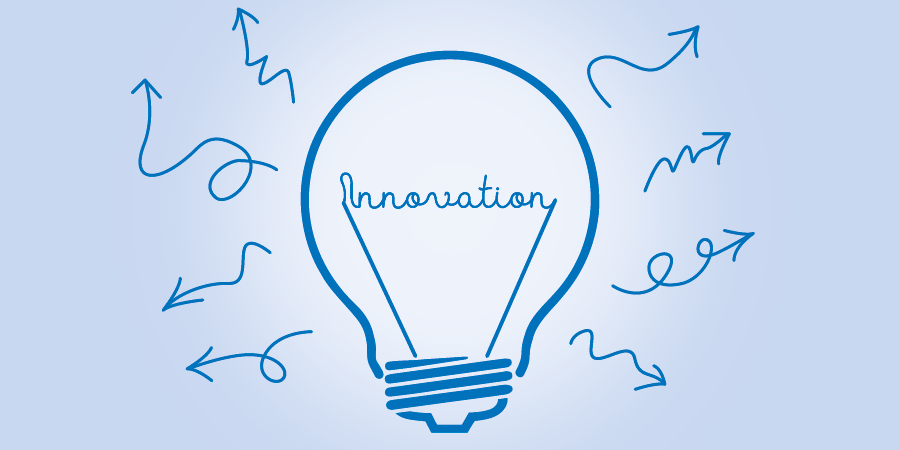
Why has innovation become a strategic necessity?
Previously, organizations relied on long-term stability. Today, however, the business environment is characterized by rapid change and fierce competition. Therefore, those who do not continuously develop themselves gradually lose their position.
Furthermore, adopting a continuous development approach gives the organization:
Greater ability to adapt to changes
Opportunities to discover new markets
Continuous improvement in efficiency
To enhance customer loyalty
Therefore, leading institutions do not treat development as a passing event, but as a permanent system.
Key elements that support an innovation environment within an organization
In order for the concept to become a practical reality, a set of essential pillars must be available.
1. A motivating organizational culture
First, the organization needs an environment that encourages experimentation and embraces new ideas.
If employees are afraid of failure, they will not risk putting forward unconventional ideas.
For this reason, building a supportive culture is the real starting point.
2. Clear-sighted leadership
On the other hand, leadership plays a pivotal role in guiding efforts.
A leader who sets a clear vision and provides the necessary support creates a safe environment for continuous development.
3. Sufficient and targeted resources
In addition, tangible results cannot be achieved without:
allocated budgets
Qualified personnel
Suitable technical tools
Systems for managing ideas
4. Managing risks consciously
Naturally, any change carries a degree of uncertainty.
However, successful organizations do not avoid risks, but rather manage them in a well-thought-out, scientific manner.
Types of innovation in the modern business environment
Institutional development takes many forms, and each type has a different goal and a special effect.
Product Innovation
It focuses on introducing new products or services, or improving existing ones.
The goal is usually to meet unserved needs or improve the user experience.
Process innovation
This type, however, seeks to increase operational efficiency by redesigning procedures and reducing waste.
Business model innovation
In contrast, this type goes beyond the product itself to rethink how revenue is generated or value is delivered.
Digital Innovation
With the technological transformation, the use of technology has become a pivotal element in reshaping services and processes.
gradual and radical innovation
Incremental innovation relies on continuous small improvements.
The radical one, however, brings about a profound change that completely reshapes the market.
Global examples of transformative innovation
To illustrate the picture practically, we will review examples of companies that have transformed their industries:
Airbnb has redefined the concept of accommodation through the sharing economy model.
Tesla has changed the rules of the automotive industry by accelerating the adoption of electric vehicles.
Netflix has moved the content viewing experience from traditional rental to instant digital streaming.
SpaceX has reduced the costs of space exploration thanks to reusable rockets.
These examples illustrate that real change happens when a clear vision is combined with disciplined execution.

The innovation process within organizations: systematic steps
In order for the concept not to remain theoretical, it is necessary to follow a clear process.
1. Discovering opportunities
First, the market is analyzed and gaps and unmet needs are identified.
2. Generating solutions
After that, workshops and brainstorming sessions are held to produce as many proposals as possible.
3. Evaluation and Selection
The ideas are then sorted according to the criteria of feasibility, impact, and cost.
4. Developing a prototype
Later, the idea is transformed into a testable model.
5. Testing and Improvement
After the experiment, the observations are collected and the solution is modified according to the results.
6. Implementation and Expansion
Finally, the solution is launched on a wider scale with a clear plan for measurement and follow-up.
Frequently Asked Questions
Is every new idea considered an innovation?
No. An idea only becomes an innovation when it is implemented and tangible value is achieved from it.
Is innovation limited to technology companies?
On the contrary, it can be applied in the governmental, educational, health and social sectors.
What is the difference between continuous improvement and radical innovation?
The first focuses on gradual development, while the second brings about a profound transformation in the market or operating model.
How does an organization begin its journey?
By assessing its readiness, then building an idea management system, and defining clear performance indicators.
In light of the above, it is clear that innovation is not a random activity, but rather an integrated system that requires vision, leadership, and a supportive culture. Therefore, organizations that adopt it systematically are more competitive and sustainable.
Start your journey with Reins
If you are seeking to:
Building an integrated corporate innovation management system
Leadership development according to global best practices
Developing a measurable and implementable strategy
Reins is your strategic partner for achieving that.