
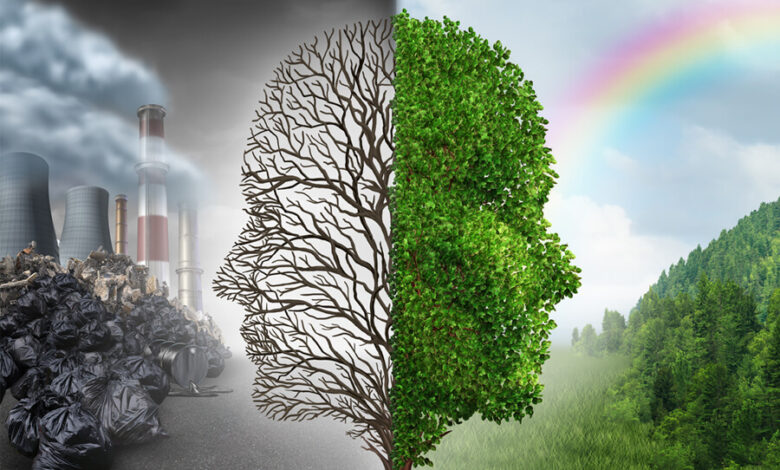
In light of the rapid transformations the world has witnessed in recent decades, global warming is no longer merely a scientific concept discussed in specialized conferences or academic reports; it has become a tangible reality that directly impacts the environment, the economy, and human societies. From rising temperatures to the depletion of natural resources, the effects of this phenomenon are now present in the details of daily life, compelling governments, institutions, and individuals to reconsider their patterns of production and consumption.
On the other hand, The environment is no longer a secondary factor in decision-making; it has become a strategic axis affecting economic growth, social stability, and the competitiveness of institutions. Therefore, there is a growing global interest in understanding global warming as a multidimensional issue, where the natural sciences intersect with economics, management, and public policy.
Therefore, this article aims to provide a comprehensive analytical treatment of the concept of global warming, its causes, and its increasing environmental impacts, while highlighting the institutional role in mitigating these effects, both structurally and practically.
Firstly: Environment and Global Warming – Scientific Concept and Climate Explanation
How does global warming affect the balance?
To begin with, global warming is defined as the gradual and continuous rise in the Earth’s average temperature due to an increased concentration of greenhouse gases in the atmosphere. In other words, these gases trap heat within the atmosphere instead of escaping into space, leading to a thermal imbalance on the planet.
It is important to distinguish between natural global warming, which is essential for life, and enhanced global warming caused by human activities. The real problem lies not in the phenomenon itself, but in its unprecedented acceleration over the past century, which has placed enormous pressure on the environment and natural systems.
The physical mechanism of global warming
To clarify the picture more precisely, the greenhouse effect can be summarized as a series of interconnected processes. First, sunlight reaches the Earth’s surface. Then, the land and oceans absorb a large portion of this energy. Next, the Earth reflects some of this energy as thermal radiation. Here, greenhouse gases intervene, trapping this radiation within the atmosphere. As a result, temperatures gradually rise, directly impacting the environment and biological systems.
Second: Greenhouse gases and their direct impact on the environment
The role of carbon dioxide in environmental degradation
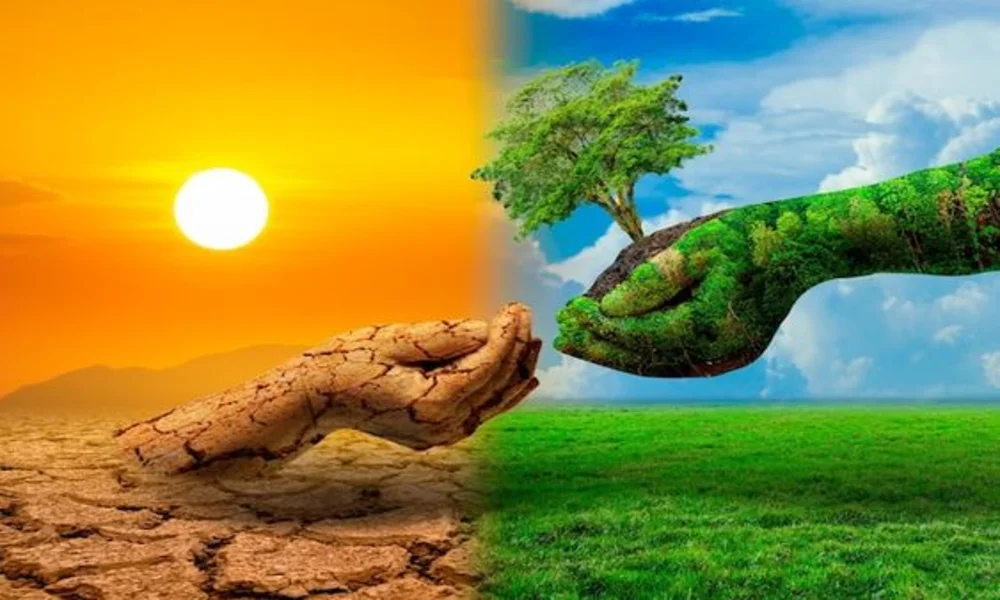
In reality, greenhouse gases are not all equal in their impact, but their combined accumulation leads to serious consequences in the medium and long term. Therefore, understanding the nature of these gases and their sources is a fundamental step in any effort to protect the environment.
Major greenhouse gases and their sources
Carbon dioxide (CO₂):
It is the most prevalent greenhouse gas, primarily produced by the burning of fossil fuels in the energy, transportation, and industrial sectors. As reliance on these sources continues, emissions increase, placing growing pressure on ecosystems.
Methane (CH₄):
Produced by agricultural activities such as livestock farming and organic waste management. Although its concentration is lower than carbon dioxide, its ability to trap heat is many times greater.
Nitrous oxide (N₂O):
It is associated with the use of chemical fertilizers in agriculture and directly affects soil and air quality.
Industrial gases:
They are used in cooling and manufacturing systems, and are characterized by their long lifespan in the atmosphere, which makes their environmental impact extend for decades.
Therefore, reducing the emission of these gases is a fundamental pillar for preserving the environment and reducing the pace of climate change.
Third: Human causes of global warming and its environmental consequences
Industrial activities and their increasing pressure
1. Heavy reliance on fossil fuels
Primarily, the global economy remains heavily reliant on coal, oil, and natural gas. As a result, carbon emissions are rising, while the environment’s capacity to absorb and adapt to these emissions is diminishing.
2. Unregulated industrial expansion
On the other hand, Despite the vital role of industry in supporting economic growth, the absence of strict environmental standards leads to air and water pollution and soil degradation. Consequently, natural systems suffer losses that are difficult to recover in the short term.
3. Deforestation and decline in vegetation cover
Moreover, Forests represent a natural defense against climate change, absorbing large amounts of carbon dioxide. However, deforestation reduces this capacity, accelerating the pace of warming.
4. Unsustainable agricultural practices
In the same context, some traditional agricultural methods contribute to the release of large quantities of greenhouse gases, as well as the depletion of soil and water, which negatively affects the rural environment and food security.
Fourth: How does global warming directly affect the environment?
Rising temperatures and their impact on nature
High temperatures
Initially, global warming leads to an increase in average global temperatures, causing more intense and frequent heat waves. As a result, living organisms are subjected to biological stresses that affect their survival and reproduction.
Disruption of climate patterns
Subsequently, rainfall and wind patterns change, leading to prolonged droughts in some areas and devastating floods in others. This disruption poses a direct threat to the stability of ecosystems.
Decline in natural resources
In addition, essential resources such as fresh water, agricultural land, and forests are affected. Over time, the environment becomes less able to provide the natural services upon which humans depend.

Fifth: Environmental degradation and the economic effects of global warming
The relationship between the environment and economic stability
In fact, the effects of global warming are not limited to nature alone, but extend to the global economy. On the one hand, Extreme weather events lead to the destruction of infrastructure and increased maintenance costs. On the other hand, Agricultural and industrial productivity is affected, which in turn impacts food security and commodity prices.
Furthermore, organizations are facing increasing challenges in managing environmental risks, which is prompting them to reassess their business models.
Sixth: Why is the environment a strategic focus for modern organizations?
As a key element of corporate governance
Currently, environmental concern is no longer merely a moral issue; it has become a significant factor in investment decisions, customer trust, and corporate reputation. Investors now prefer companies that demonstrate a clear commitment to sustainability, and customers are becoming more aware of the environmental impact of their products and services.
Therefore, organizations find themselves facing an inevitable need to integrate the environmental dimension into their long-term strategies.
Seventh: The role of companies in protecting the environment and reducing global warming
Reducing the carbon footprint to support the environment
Primarily, relying on solar, wind and other clean energy sources helps reduce emissions and preserve the environment.
Improve resource efficiency
Then, rationalizing the consumption of energy, water and raw materials leads to reducing waste and lowering operating costs.
Measuring and reducing the carbon footprint
In addition, leading organizations rely on accurately measuring their emissions and developing gradual reduction plans in collaboration with suppliers and partners.
Eighth: Innovation and technology in the service of the environment and sustainability
Digital solutions for environmental protection
In the age of digital transformation, technology plays a pivotal role in addressing climate change. For example, smart energy management systems enable monitoring of consumption and improved efficiency. Artificial intelligence and data analytics also contribute to predicting environmental risks and making proactive decisions.
Ninth: The social and health dimensions of environmental degradation due to global warming
The impact of environmental degradation on public health
Beyond the economic impact, the effects of global warming extend to social and health aspects. On the one hand, rising temperatures lead to an increase in heat-related illnesses and air pollution. On the other hand, resource scarcity is forcing some communities to migrate, creating complex social challenges.
Tenth: Policies and legislation and their role in protecting the environment
Environmental policies play a pivotal role in guiding markets and regulating industrial practices. Strict legislation and government incentives can encourage investment in clean solutions and support the transition to a low-carbon economy.
Eleventh: Strategic partnerships to support the environment and sustainability
In reality, no single entity can address the challenges of global warming alone. Therefore, collaboration between the private sector, governments, and civil society is essential to achieving tangible results and protecting nature in the long term.
Twelfth: Corporate culture and building long-term environmental awareness
Finally, corporate culture plays a crucial role in establishing sustainable practices. The higher the employee awareness, the better their daily behaviors, the less waste there is, and the stronger their commitment to environmental protection.

Frequently Asked Questions (FAQ)
What is the relationship between global warming and the environment?
Global warming leads to an imbalance in the environment and threatens its natural resources.
How can companies protect the environment?
By reducing emissions, improving energy efficiency, and adopting sustainable solutions.
Does the environment influence investment decisions?
Yes, the environment has become a key factor in assessing risks and returns.
What role does innovation play in protecting the environment?
Innovation helps reduce environmental impact and improve resource efficiency.
Does environmental commitment generate profits?
In the long run, yes, because it promotes trust and sustainability.
In conclusion, global warming represents a global challenge that places the environment at the heart of the development equation. As climate risks escalate, moving towards sustainability becomes an indispensable strategic choice. Institutions and communities that take decisive action today are not only protecting nature but also laying the foundations for a more stable and resilient future for generations to come.
If you are looking to build a sustainable business model, reduce your climate impact, and enhance your corporate image, Reins offers practical expertise and advice to help you protect the environment and achieve smart, sustainable growth.
Connect with Reins today, and start your journey towards the future.